



From access to inclusion?

Voicing the consumer experience of disabled football fans in Scotland and England

This research examines the matchday experiences of disabled football supporters in Scotland and England. There is a focus on how access, inclusion, atmosphere and belonging shape football consumption. Using a photo-narrative methodology, the project explores disabled fans’ own accounts of attending matches, from whether stadium facilities are fit for purpose on accessibility, to the wider social implications of a fan’s matchday experience.
The research is structured around five key themes: accessibility, independence, travelling, atmosphere and friendship. In doing so, the research explores the extent to which disabled supporters are able to participate in football fandom on equal terms, and how their experiences can inform future policy, practice and accessibility standards across the game.

The photo exhibition

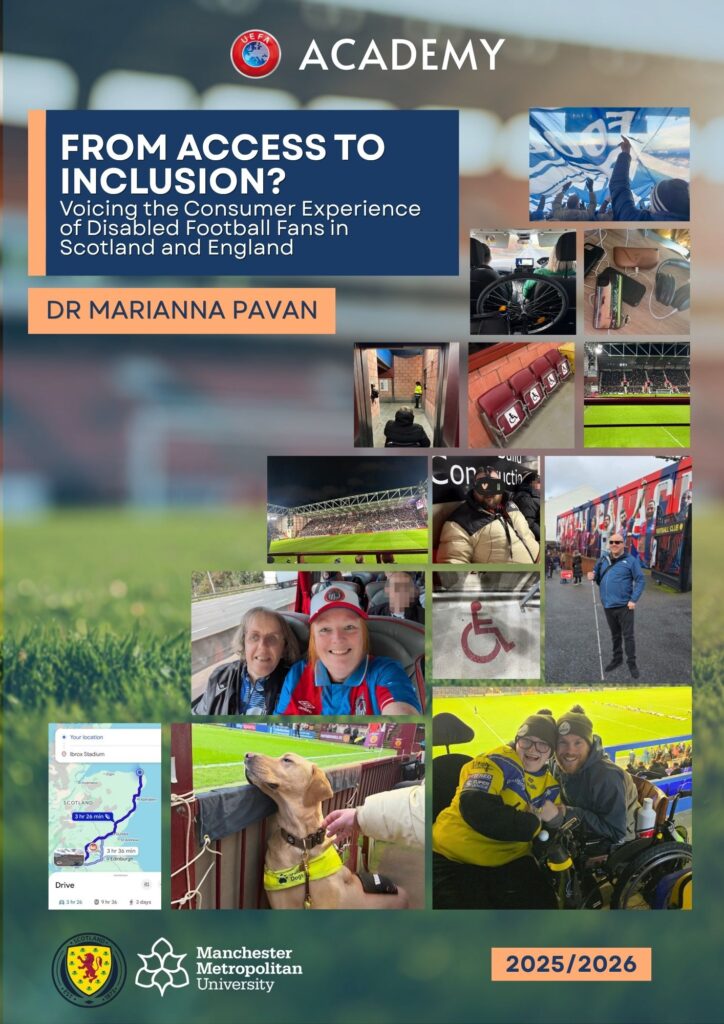
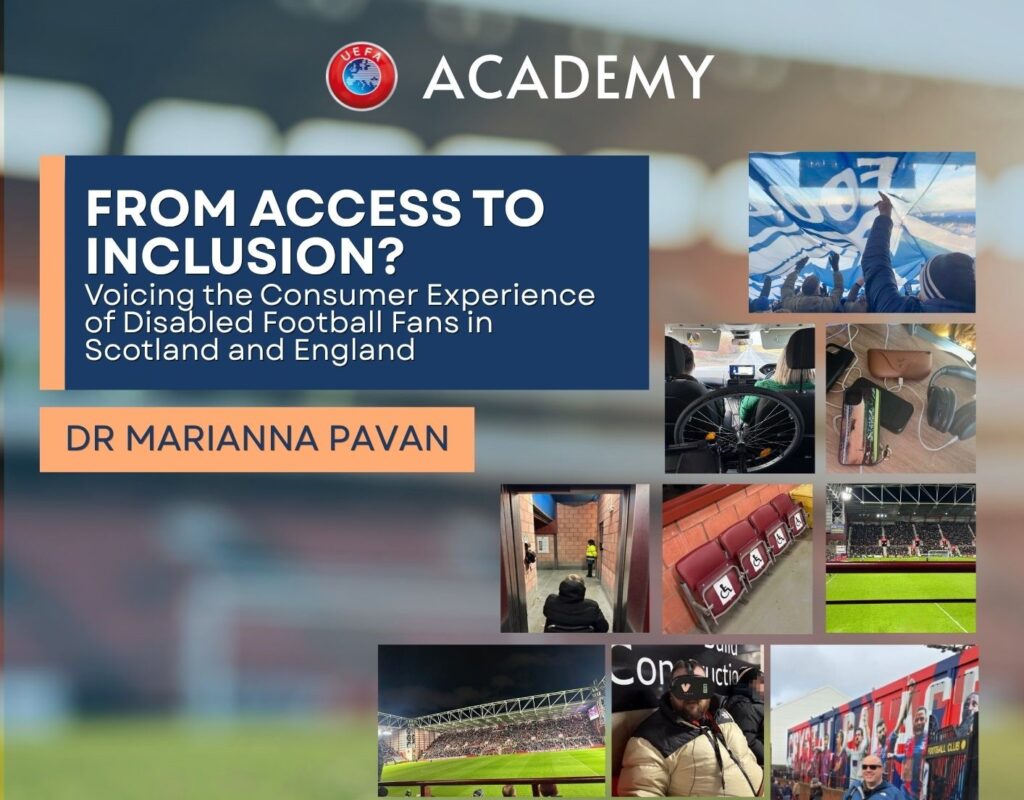
The photo exhibition presents images taken by disabled fans of Scottish and English clubs as part of the research, offering a visual narrative of their matchday experiences.
Through participant-generated photographs, the exhibition captures the five themes investigated in the research and shows how and to what extent barriers to access can affect disabled fans’ matchday experience, as well as highlights good practices that some clubs are already implementing.
The images have all been given a title by the participants, allowing the fans to share their perspectives on the experience and illustrate what they wanted to share with the public.
The aim of the Matchday Through Our Lens photo exhibition is to raise awareness on disabled fans’ matchday journey in an easy and accessible way so that stakeholders such as clubs, football governing bodies and non-disabled fans can be involved by seeing their lived experience.
Final Report

The final report presents the findings from this study into the football consumer experience of disabled fans in Scotland and England. Drawing on a participatory photo-narrative methodology, it explores matchday experiences through supporters’ own voices and lens. The report examines barriers to accessibility and inclusivity, including the physical accessibility of stadia, the availability and reliability of facilities, travelling to and within grounds, and the extent to which supporters can enjoy the matchday atmosphere on equal terms. It also considers the social and emotional impact of football consumption, including effects on disabled fans’ sense of belonging, independence and inclusion.
The report is structured around five themes: accessibility, independence, travelling, atmosphere and friendship. These themes show how disabled supporters experience football as fans and as part of a wider football community, rather than focusing on stadium access alone. The report identifies where matchday provision enables participation and where additional barriers persist. It also explores to what extent clubs consider disabled fans’ lived experiences and recognise them as key stakeholders. The report concludes with practical recommendations for clubs, governing bodies and other stakeholders, aimed at supporting more inclusive matchday environments and informing future policy, practice and accessibility standards across football.

Final Report

The final report presents the findings from this study into the football consumer experience of disabled fans in Scotland and England. Drawing on a participatory photo-narrative methodology, it explores matchday experiences through supporters’ own voices and lens. The report examines barriers to accessibility and inclusivity, including the physical accessibility of stadia, the availability and reliability of facilities, travelling to and within grounds, and the extent to which supporters can enjoy the matchday atmosphere on equal terms. It also considers the social and emotional impact of football consumption, including effects on disabled fans’ sense of belonging, independence and inclusion.
The report is structured around five themes: accessibility, independence, travelling, atmosphere and friendship. These themes show how disabled supporters experience football as fans and as part of a wider football community, rather than focusing on stadium access alone. The report identifies where matchday provision enables participation and where additional barriers persist. It also explores to what extent clubs consider disabled fans’ lived experiences and recognise them as key stakeholders. The report concludes with practical recommendations for clubs, governing bodies and other stakeholders, aimed at supporting more inclusive matchday environments and informing future policy, practice and accessibility standards across football.