

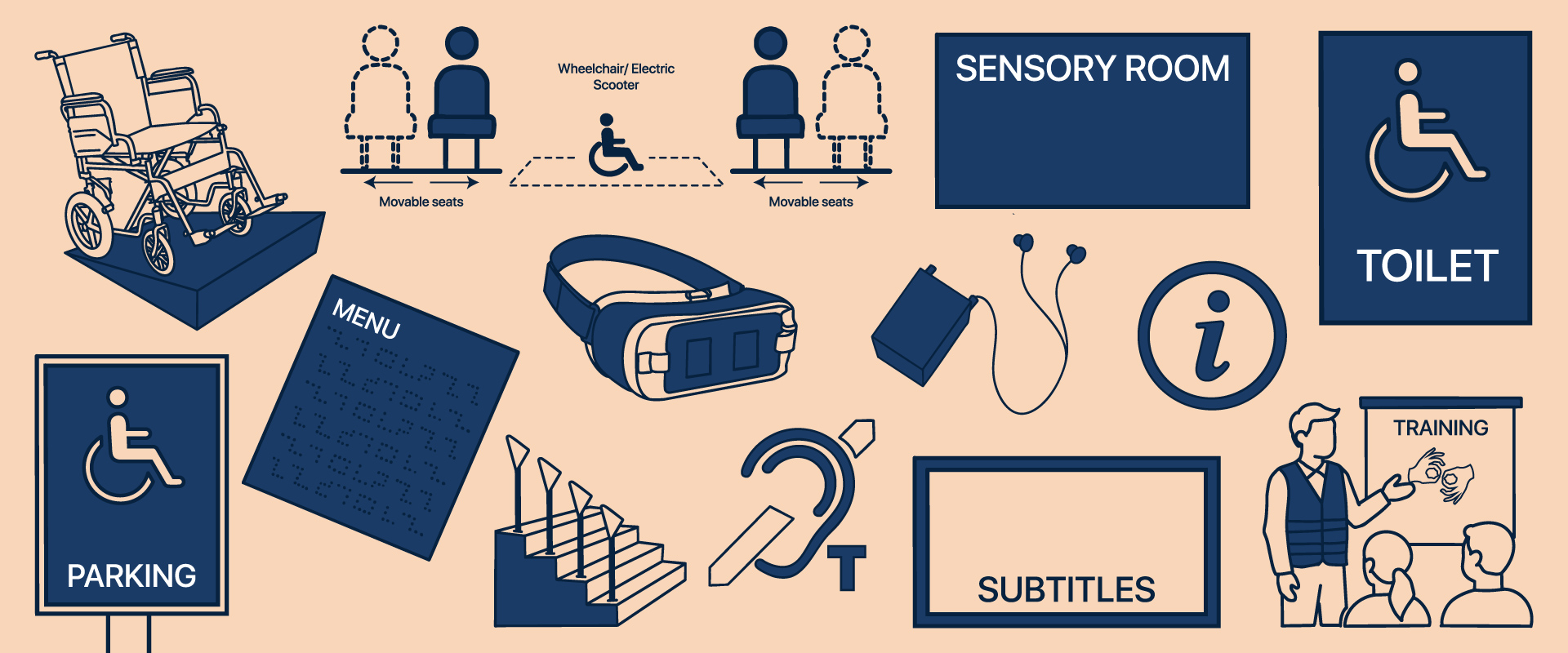
A collection of dark blue infographics on an orange background, displaying vital accessible resources that improve the matchday experience for disabled fans. Such as, an accessible ramp, disabled parking, a headset, a recording device, a sensory room, an interpreter symbol, an accessible menu (in braille) and a staircase.

About the Project

In the 2023/24 financial year, 16.8 million people in the UK were living with a disability, accounting for around 25% of the total population (Stiebahl et al., 2025).
Football is the most attended sport in the UK, and yet disabled fans still face many barriers to watching matches live (Level Playing Field, 2023, 2024, 2025). Therefore, understanding disabled fans’ matchday experiences is essential. Insights from their lived experiences can inform stakeholders’ inclusive practices, helping to improve access and enjoyment for everyone.
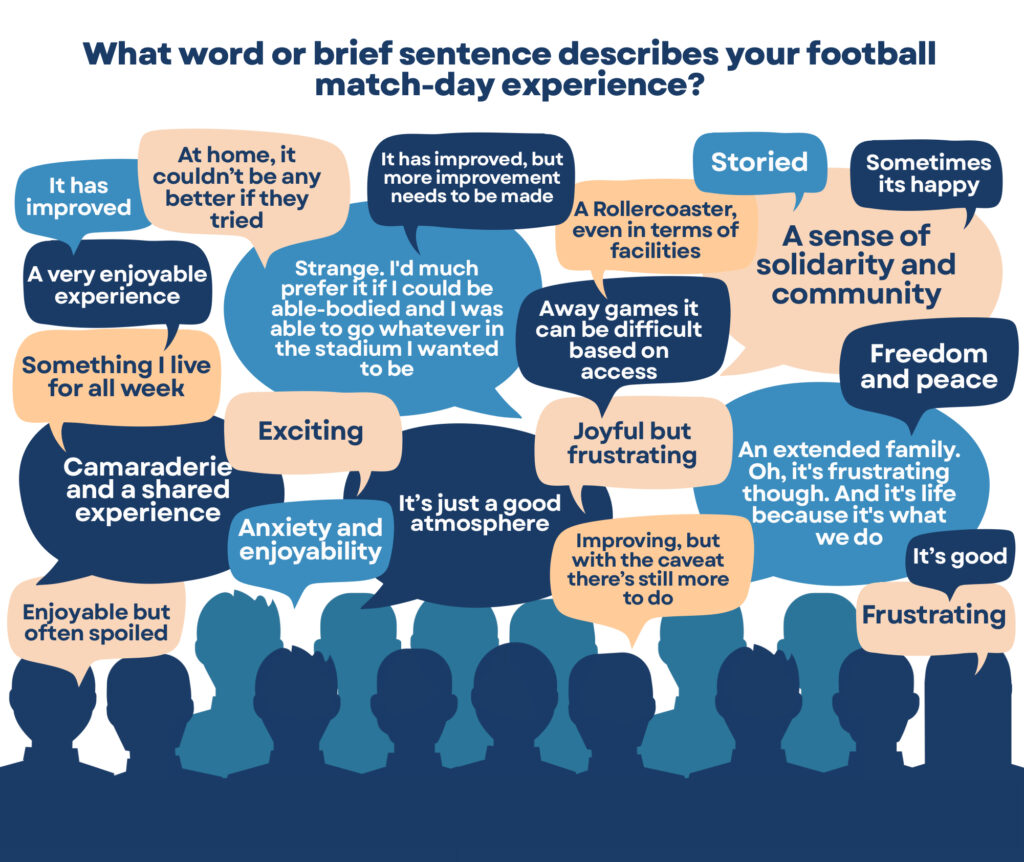
Indeed, below is an infographic showing in one word or a brief sentence what the football experience can represent for disabled fans.
This research follows the consumer experience journey of 25 disabled fans in Scotland and England. The final report shares, through both participants’ words and lenses, some of the obstacles they face, as well as some of the best practices put in place by clubs. Thus, both the physical accessibility of the experience and the emotional aspects have been investigated. The journey includes travelling to the stadium, accessing it, reaching their seat, moving within the grounds, using accessible basic facilities such as food kiosks and toilets, and then leaving the grounds.

The photo-exhibition section is organised around five themes: Accessibility, Travelling, Atmosphere, Friendship, and Independence; each with a dedicated page presenting photos that illustrate how disabled fans experience that part of the matchday journey. Every photo includes a title chosen by the disabled fans who took it.

Finally, the recommendations page of the website is dedicated to evidence-based suggestions for clubs on how to create an inclusive football experience.

Use of language

There has been a long-standing debate in disability studies regarding the use of person-first language (e.g., person with disabilities) versus identity-first language (e.g., disabled person). Depending on the period and the predominance of specific disability models, standpoints, and even geography, one term has been preferred over the other (see Best et al., 2022). Dunn and Andrews (2015) recommend flexibility in terminology, suggesting authors alternate between person-first and identity-first language or consult participants to respect their preferences. Powis et al. (2022) in their recent book on researching on disability, share a similar view accepting the use of terms such as disabled people, non-disabled people, people with disabilities, people who experience disability, able-bodied people. While this researcher would generally use the person-first or identity-first approach interchangeably, in this study the terms disabled fans and non-disabled fans are the ones selected. This choice reflects the terminology adopted in the UK by the Disabled Supporter Associations (DSAs), which were established by fans themselves and intentionally use identity-first language to describe their membership.

Use of language

There has been a long-standing debate in disability studies regarding the use of person-first language (e.g., person with disabilities) versus identity-first language (e.g., disabled person). Depending on the period and the predominance of specific disability models, standpoints, and even geography, one term has been preferred over the other (see Best et al., 2022). Dunn and Andrews (2015) recommend flexibility in terminology, suggesting authors alternate between person-first and identity-first language or consult participants to respect their preferences. Powis et al. (2022) in their recent book on researching on disability, share a similar view accepting the use of terms such as disabled people, non-disabled people, people with disabilities, people who experience disability, able-bodied people. While this researcher would generally use the person-first or identity-first approach interchangeably, in this study the terms disabled fans and non-disabled fans are the ones selected. This choice reflects the terminology adopted in the UK by the Disabled Supporter Associations (DSAs), which were established by fans themselves and intentionally use identity-first language to describe their membership.