

About the Research
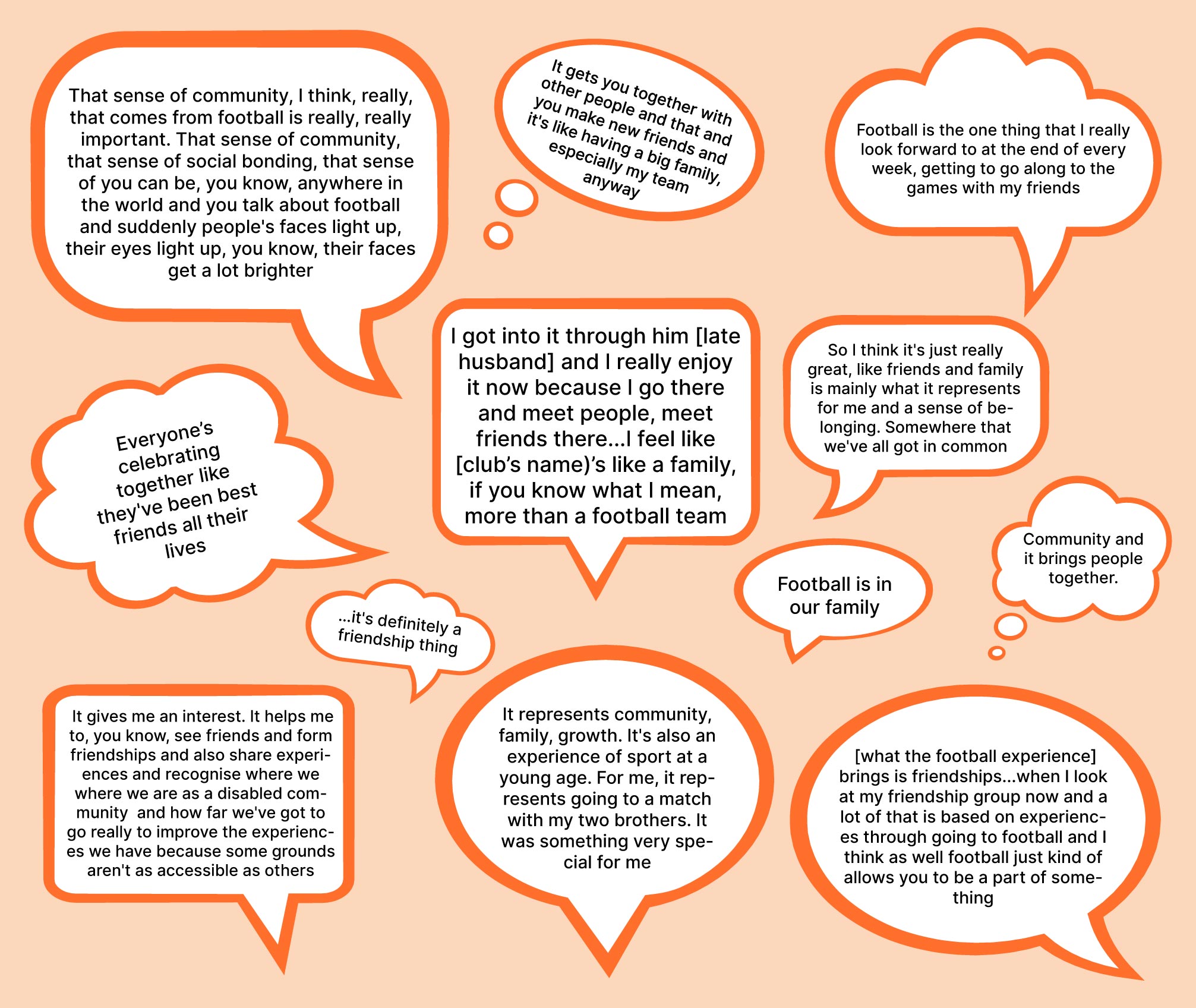
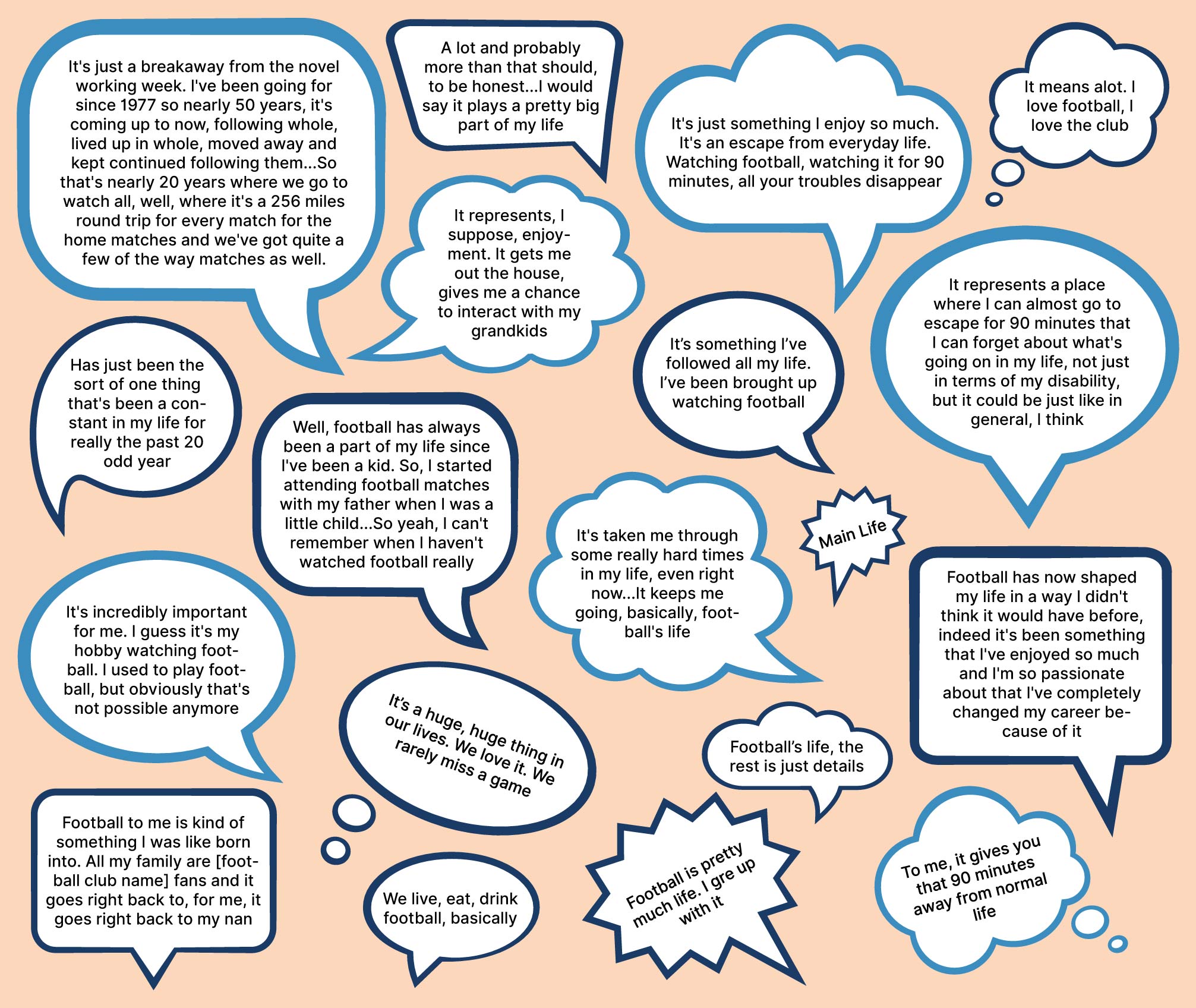
This research stems from an understanding of the importance of watching football for disabled fans. Below are two infographics presenting their responses on what football means to them.
What does football mean to disabled fans?
Research methodology and participants sample
This study used a photo-narrative method, which includes participant-generated photographs followed by individual semi-structured interviews. Data collection was carried out by the Principal Investigator between October 2025 and April 2026.
Participants, who became co-researchers, included 25 disabled fans (15 from Scotland and 10 from England) with lived experience of attending matches in these contexts. The co-researchers represented a range of disabilities, including mobility impairments, visual impairments, hearing impairments, neurological conditions, and mental health conditions. The majority were season-ticket holders (all except two: one former season-ticket holder and one individual on the waiting list).
The decision to adopt a qualitative participatory approach was aimed at better understanding the consumer experience of disabled fans through their own words and photographs.
As one of the co-researchers expressed, disabled fans are:
“The subject-matter experts, in that we’ve lived this day in and day out. So, you know, clubs should be tapping into that kind of real-life knowledge and using it to make improvements […] and, across different aspects of disability, what might work for me might not be enough for someone else”.
The photographs explored the themes of accessibility, atmosphere, independence, travelling, and friendship. Together, and through their intersection, these themes form the consumer journey. The discussion of the photographs, alongside the interview questions, provided an in-depth understanding of what the consumer experience is like for disabled fans.
As a result, the consumer journey, from buying a ticket, to travelling to the grounds, moving within the grounds, accessing basic facilities such as toilets and food kiosks, and leaving the grounds, is presented in the report through participants’ voices, perspectives, and images. Particular attention was given to away fixtures, recognising that the experience can differ from home games and that further attention should be paid by clubs.
As attending football is also a social experience, the formation of friendship networks was explored.
This work informed a series of recommendations for clubs on how to ensure an inclusive experience. The findings of the study can be read in the Final Report.